Workplace safety is no longer just about locks, cameras, emergency exits, and written policies.
Those things still matter. But today, workplace safety also depends on people: how they feel, how they communicate, and how quickly they can get help when a situation becomes unsafe.
That is why more organizations are paying attention to the connection between psychological safety and workplace safety.
Psychological safety helps employees speak up early. Physical safety systems help employees act quickly when prevention is not enough.
A strong safety strategy needs both.
What Psychological Safety Really Means in the Workplace
Psychological safety means employees feel safe speaking up without fear of embarrassment, punishment, or retaliation.
In practice, this means employees are more likely to:
- Report concerns early
- Ask for help before a situation worsens
- Share uncomfortable information with leadership
- Point out risks others may have missed
- Participate in de-escalation instead of avoiding conflict
According to Harvard Business Review, high-performing teams depend on psychological safety because people need trust before they will speak honestly, take reasonable risks, and raise concerns.
Source: https://hbr.org/2017/08/high-performing-teams-need-psychological-safety-heres-how-to-create-it
Why Psychological Safety Matters for Workplace Safety
When employees do not feel safe speaking up, small problems can become larger ones.
Concerns may go unreported. Tension can build quietly. Warning signs may be ignored because employees do not want to seem dramatic, difficult, or overreactive.
That silence creates risk.
In workplace safety, early communication is often the difference between prevention and escalation.
Where Psychological Safety Breaks Down
Even healthy workplace cultures face difficult moments.
A team may have strong communication, good leadership, and clear expectations. But when a real situation escalates, culture alone may not be enough.
For example, imagine a frustrated client becomes verbally aggressive during a meeting.
- The employee tries to stay calm
- They use de-escalation techniques
- The client becomes louder and more unpredictable
- The employee needs help but does not want to make the situation worse
This is the gap many organizations miss.
Psychological safety helps employees communicate concerns. But when behavior becomes threatening, employees also need a fast, discreet way to alert others.
Culture Is Not a Response Plan
This is the uncomfortable truth:
A positive culture does not automatically create an immediate response.
Your employees may trust leadership. They may know the policy. They may have completed training. But if they are alone in a volatile situation, they still need a practical way to get support quickly.
According to OSHA, workplace violence can include threats, harassment, intimidation, verbal abuse, physical assaults, and other threatening behavior. OSHA also encourages employers to assess risks, develop prevention programs, train workers, and establish procedures for responding when incidents occur.
Source: https://www.osha.gov/workplace-violence
Why Physical Safety Systems Are the Missing Layer
Physical safety systems add a response layer when communication and prevention are not enough.
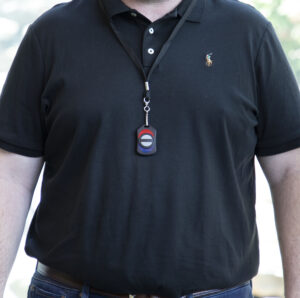
Real-time alert systems, such as https://teamalert.com, give employees a way to request help quickly and discreetly during escalation scenarios.
This matters because employees should not have to choose between staying safe and escalating a situation further.
The right system can help provide:
- Immediate access to support
- Faster notification to the right people
- Reduced response time
- More confidence for employees working alone or in private settings
- A clearer process when situations become unpredictable
The Strongest Safety Strategies Combine Prevention and Response
Organizations do not need to choose between psychological safety and physical safety systems.
They need both.
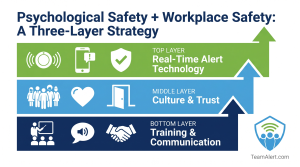
A complete workplace safety strategy includes three layers:
1. Training
Employees need training in conflict resolution, de-escalation, reporting procedures, and recognizing warning signs.
2. Culture
Employees need a workplace culture where they can raise concerns early without fear of being dismissed, blamed, or ignored.
3. Technology
Employees also need real-time alert tools for situations where immediate backup is necessary.
OSHA’s safety management guidance emphasizes that a strong safety and health program involves leadership commitment, worker participation, hazard identification, training, and continuous improvement.
Source: https://www.osha.gov/safety-management
Use Case: When Culture Meets Capability
Consider a counseling center.
The organization has a strong culture. Staff members are trained in de-escalation. Supervisors encourage open communication. Employees are expected to report concerns early.
Then a private session becomes unpredictable.
The counselor senses the situation shifting. The client becomes agitated. The counselor does not want to reach for a phone or do anything that could intensify the moment.
With a real-time alert system in place, the counselor can discreetly trigger an alert.
Within seconds:
- Support staff are notified
- The right people know help is needed
- Assistance can arrive without creating unnecessary panic
- The employee is not left to manage the situation alone
That is what happens when culture and capability work together.
Questions Every Organization Should Ask
If your organization is evaluating workplace safety, ask these questions:
- Do employees feel comfortable reporting concerns early?
- Do employees know what to do when a situation escalates?
- Can employees request help discreetly?
- Does the response process depend on one person being available?
- How quickly can the right people be notified?
- Are employees protected when prevention is not enough?
If the answer to any of these questions is unclear, your safety strategy may have a gap.
Final Thought: Prevention Plus Response Creates Real Safety
Psychological safety helps prevent issues from being ignored.
Physical safety systems help employees get support when a situation becomes urgent.
One protects communication.
The other protects response.
You do not need one or the other.
You need both.
To learn more about real-time safety communication and alert systems, visit https://teamalert.com/blog.
You can also start a free trial here: https://manage.teamalert.com/signup/