Severe weather communication for businesses is no longer optional. When conditions change fast, organizations need a reliable way to send clear instructions, reduce confusion, and help keep employees safe.
Severe weather is no longer an occasional disruption. For many organizations, it is a growing operational risk.
And in many cases, the biggest challenge is not the storm itself.
It is communication.
When conditions change quickly, employees need clear instructions right away. Delays create confusion. Confusion creates risk.
Why Severe Weather Communication for Businesses Matters
Today’s workforce is not always in one place. Some employees are on-site. Others are remote. Others are moving between locations or working in the field.
That makes emergency communication harder. 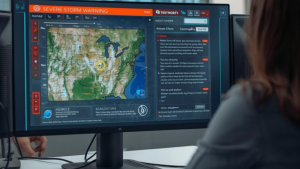
According to Ready.gov’s business emergency planning guidance, preparedness plans should include communications planning, IT support and recovery, and continuity planning.
That matters because communication is not a secondary issue during severe weather. It is part of the response plan.
OSHA’s emergency action plan standard also requires procedures for reporting emergencies, evacuation, accounting for employees after evacuation, and maintaining an employee alarm system when an emergency action plan is required.
Why Real-Time Severe Weather Communication Is Critical
During severe weather:
- Conditions can change fast
- Instructions must be immediate
- Teams need one clear message
- Delays can put people at greater risk
Ready.gov notes that the initial minutes of an emergency are critical and that prompt action and warnings can save lives.
That is exactly why severe weather communication for businesses needs to be fast, simple, and consistent.
What Happens Without Severe Weather Emergency Communication

Without a unified alert system:
- Employees receive inconsistent information
- Evacuation or shelter-in-place instructions are delayed
- Managers send different messages to different teams
- Safety procedures begin to break down
- Confusion spreads faster than the actual weather event
And once confusion starts, response quality drops.
Example Scenario: A Tornado Warning Is Issued
A tornado warning is issued during business hours.
Some employees are notified right away.
Others do not see the message.
One department is told to shelter in place. Another is told to move. A few people are left wondering whether the warning applies to their location at all.
The result is not just delay.
The result is confusion, and confusion increases risk.
This is why OSHA’s tornado preparedness guidance tells businesses to develop an emergency plan, identify shelter locations, account for personnel, and have a tornado alert system in place.
How Severe Weather Communication Systems Improve Preparedness
Solutions like TeamAlert help organizations respond faster and more consistently when severe weather threatens operations.
With a real-time alert system, organizations can:
- Send mass alerts instantly so employees receive direction without delay
- Deliver consistent instructions so every team gets the same message
- Reach employees across multiple devices including mobile, desktop, and SMS
- Target specific groups or locations when only certain sites are affected
- Provide real-time updates as weather conditions change
- Use pre-configured templates to reduce hesitation during high-pressure moments
Key Features for Severe Weather Communication for Businesses

Multi-Channel Emergency Communication
Messages should reach employees wherever they are. Mobile alerts, desktop notifications, and SMS all help close communication gaps.
Pre-Configured Severe Weather Alerts
During an emergency, speed matters. Templates make it easier to send the right message quickly.
Location-Based Severe Weather Communication
Not every weather event affects every site. Location-based messaging helps organizations send relevant instructions only to the people who need them.
Real-Time Weather Emergency Updates
Severe weather events evolve. Employees need updates as conditions change, not just one message at the beginning.
Use Case: Severe Weather Communication in Action
During a severe storm, an alert is sent immediately to all affected employees.
The message tells them exactly what to do.
Follow-up updates are sent in real time as the situation changes.
Instead of piecing together information from different managers, employees receive one clear direction through one system.
The outcome is simple:
People act faster. Teams stay aligned. Response improves.
Final Thought: Preparedness Starts With Communication

You cannot prevent severe weather.
But you can reduce confusion, shorten delays, and improve how your organization responds.
And that starts with communication.
The faster the right message reaches the right people, the safer and more coordinated your response becomes.