Why Workplace Safety Now Depends on Real-Time Response
Walk into any workplace today, whether it is a healthcare clinic, school, government office, or corporate workplace, and one thing is clear: workplace safety expectations have changed.
Employees no longer assume help will arrive eventually. They expect help immediately.
That shift is forcing organizations to rethink what workplace safety really means. It is no longer enough to have a policy in a binder or a plan that looks good on paper. Today, workplace safety depends on how quickly people can respond when something starts to go wrong.
The New Reality of Workplace Safety Risk
Workplace safety threats are no longer rare, isolated events. They are more unpredictable, more complex, and often harder to spot early.
According to OSHA, workplace violence includes physical violence, harassment, intimidation, and other threatening behavior at work. OSHA also states that workplace violence is the third-leading cause of fatal occupational injuries in the United States. In 2023, 740 workplace fatalities were caused by violent acts.
But violence is only part of the picture.
Today’s workplace safety risks also include:
- escalating behavioral health incidents
- verbal confrontations that turn physical
- lone worker emergencies
- weather-related disruptions
- medical events that require immediate response
OSHA also notes that workers who interact with volatile individuals, work alone, or serve the public may face elevated risk.
Why This Matters
Many workplace incidents do not begin as full-blown emergencies.
They start small.
A tense conversation. A distressed patient. A threatening visitor. A staff member feeling unsafe in a private office. A medical issue that seems minor at first.
However, when there is no immediate intervention, small incidents can escalate fast. That is where many organizations fail. The real gap is not always policy. It is the delay between the start of an incident and the moment someone responds.
That gap is where workplace safety breaks down.
Why Speed Matters in Workplace Safety
In an emergency, seconds do more than matter. They shape the outcome.
Imagine this:
A staff member is cornered by an aggressive individual in a private office.
Calling 911 may escalate the situation. Leaving the room may not be possible. Yelling for help could make things worse.
Without a discreet and immediate way to alert others, that employee is effectively on their own.
This is why speed is now central to workplace safety. When the response is delayed, risk grows. When help is immediate, escalation can often be contained before it becomes a crisis.
The Problem With Traditional Response Methods
Many organizations still rely on outdated communication methods during critical moments, such as:
- phone calls
- emails
- internal messaging
- manual escalation through supervisors
The problem is obvious. These methods add steps at the exact moment when simplicity matters most.
In a high-stress situation, employees should not have to stop and think:
- Who should I call?
- Who is available?
- Will they see the message in time?
- What do I do next?
The more friction you add, the slower the response becomes.
From Safety Plans to Real-Time Action
Most organizations already have workplace safety policies.
The issue is not whether a plan exists. The issue is whether the plan works in real time.
Traditional safety plans often fail because they:
- depend on employees recognizing the threat early
- require multiple steps to escalate the issue
- lack immediate visibility for responders
- create confusion about who owns the response
That is why more organizations are moving from reactive planning to real-time action.
Instead of asking employees to remember a chain of steps under pressure, modern systems reduce the process to one clear action: trigger an alert and get the right people involved immediately.
How Real-Time Alert Systems Improve Workplace Safety
Modern workplace safety tools are not just faster. They are easier to use under stress.
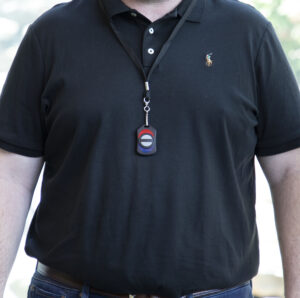
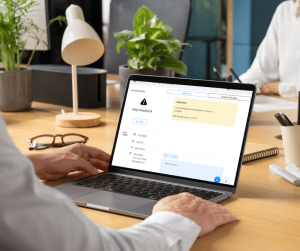
For example, TeamAlert says staff can trigger alerts silently through a desktop icon, mobile app, or hardware alert button. Alerts can be routed to predefined individuals, teams, or emergency responders. The platform also supports phone, desktop, and smartwatch notifications, plus two-way chat during an active event.
That kind of design changes what happens in the moment.
1. Instant notifications
The right people are notified at the same time, which reduces delay and removes guesswork. TeamAlert describes this as sending alerts to coworkers or responders with a touch of a button.
2. Silent activation
Employees can ask for help without drawing attention to themselves. That matters in situations where visible escalation could make the threat worse. TeamAlert explicitly positions discreet alerting as a core benefit.
3. Real-time coordination
Alerts are only the first step. Responders also need context. TeamAlert’s two-way chat and multi-device notifications are designed to help teams coordinate during an active incident.
4. Consistency across locations
For organizations with multiple sites, remote staff, or field teams, a cloud-based system creates a more consistent workplace safety process. TeamAlert describes its platform as cloud-based and built for multi-location environments.
A Real-World Workplace Safety Example
Consider a behavioral health clinic.
A patient becomes agitated during a session. The clinician senses the interaction is shifting, but there is no safe way to leave the room. Calling out for help may intensify the situation.
With a traditional process, the clinician may have to improvise. That wastes time and increases risk.
With a real-time alert system, the clinician can discreetly trigger an alert, notify nearby staff, and receive support within seconds.
That early response can make the difference between a contained incident and a dangerous one.
What Forward-Thinking Organizations Are Doing Differently
Organizations that take workplace safety seriously are changing the way they prepare for emergencies.
They are:
- embedding safety tools into daily workflows
- giving employees one-touch ways to ask for help
- standardizing response protocols across locations
- reducing dependence on memory during high-stress moments
- prioritizing speed, simplicity, and reliability
Most importantly, they understand one key truth:
A workplace safety system only works if employees can use it instantly under pressure.
Final Thought: Workplace Safety Is Measured in Seconds
Workplace safety is no longer defined only by policies, training manuals, or compliance checklists.
It is defined by one question:
How fast can your organization respond when something goes wrong?
Because when an incident happens, there is no time to figure it out.
There is only time to act.